

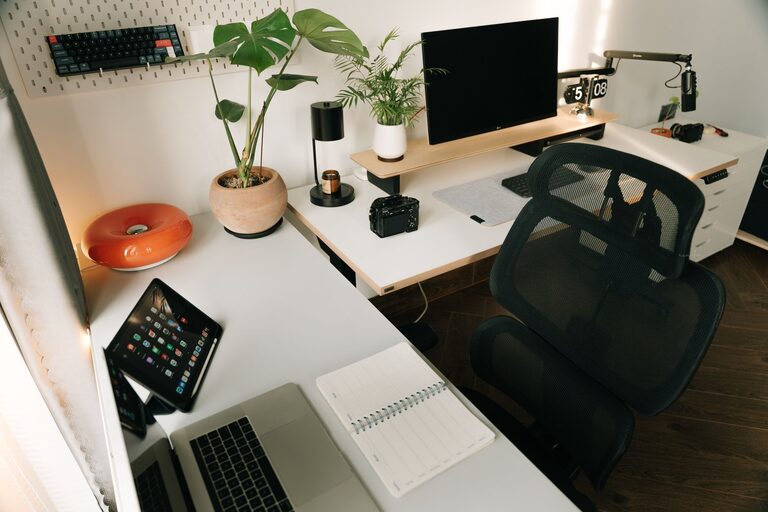
Creating a well-organized home office can make a huge difference in how you work and feel throughout the day. A clutter-free, comfortable, and functional workspace helps you stay focused, reduces stress, and can even enhance your creativity. Whether you work full-time from home or just need a dedicated area for bills and planning, these simple tips will help you transform your office into a productive haven.
1. Choose the Right Location
Start by selecting a quiet, well-lit spot in your home where you can work with minimal distractions. If possible, pick a room with a door you can close or a corner away from heavy foot traffic. Natural light is ideal as it reduces eye strain and keeps you energized. If natural light is limited, invest in bright, adjustable lamps.
2. Declutter and Keep Only What You Need
A cluttered desk can lead to a cluttered mind. Begin by removing everything from your workspace and sorting through your items.
– Keep essentials like your computer, phone, and frequently used office supplies.
– Store or discard items that you don’t use daily.
– Organize papers and notes into folders or scan them to minimize paper clutter.
Consider using a filing system or document trays to keep important documents tidy and easy to access.
3. Invest in Ergonomic Furniture
Your comfort directly affects your productivity. Having the right furniture can prevent aches and help you stay focused longer.
– Chair: Choose an adjustable chair with good lumbar support.
– Desk: Ensure your desk height allows your elbows to be at a 90-degree angle when typing.
– Monitor: Position your computer screen at eye level to prevent neck strain.
Adding a footrest or adjustable keyboard tray can also improve your posture.
4. Organize Cables and Electronics
Tangled cables not only look messy but can be a safety hazard.
– Use cable organizers, clips, or sleeves to keep wires neat.
– Label your chargers and cords to avoid confusion.
– Place electronics like printers and routers on a designated shelf or stand to clear your desk surface.
5. Maximize Storage Solutions
Smart storage keeps everything in its place and frees up your workspace.
– Use shelves or wall-mounted organizers to save floor space.
– Drawer dividers help separate smaller items like pens, paper clips, and sticky notes.
– Storage boxes or bins can hold supplies and be labeled for easy identification.
Consider vertical storage options to make the most of your room.
6. Personalize Your Space Thoughtfully
Adding personal touches makes your office inviting and motivates you to spend time there. However, balance is key—too many decorations can become distractions.
Ideas to personalize your office:
– A small plant to improve air quality and add a splash of green.
– A few framed photos or artwork that inspire you.
– A motivational quote or calendar aligned with your goals.
Keep decorations minimal and purposeful.
7. Create Zones for Different Activities
If your home office serves multiple functions, such as working, reading, or planning, create distinct zones.
– Designate an area for your computer and focused work.
– Set up a spot for reading or brainstorming with a comfortable chair or whiteboard.
– Use organizers to separate materials related to each activity.
This separation helps minimize distractions and keeps your space orderly.
8. Maintain a Cleaning Routine
Regularly cleaning and tidying your office is essential to sustain organization.
– Set aside 5–10 minutes at the end of each workday to clear your desk.
– Dust and wipe surfaces weekly.
– Reassess your workspace monthly to remove items you no longer need.
Consistency keeps your environment fresh and inviting.
9. Use Digital Tools to Reduce Paper
Wherever possible, digitize notes, receipts, and documents.
– Use apps for note-taking, task management, and calendar reminders.
– Scan important papers and organize them into folders on your computer.
– Back up files regularly to avoid data loss.
Reducing paper clutter limits physical mess and improves accessibility.
10. Manage Lighting and Temperature for Comfort
Comfortable lighting and a pleasant temperature can improve concentration.
– Avoid harsh glare by positioning screens perpendicular to windows.
– Consider adjustable blinds or curtains to control daylight.
– Use a fan, heater, or humidifier as needed to keep the room comfortable.
Good ventilation is also important for a fresh workspace.
—
By applying these simple tips, you can create a home office that supports your productivity and comfort. Remember, an organized environment is not just about aesthetics—it’s about building a space where you can work efficiently and feel good doing it. Start small, adjust what works for you, and enjoy the benefits of a well-planned home office!